Shuttle Systems in Intralogistics: Efficiency Booster or Hidden Trap?
Online, shuttle systems always look impressive. Futuristic visuals, fast cycle times, smooth time-lapse videos, everything suggests a highly efficient warehouse operation. And to be fair, shuttle systems can deliver exactly that — but only when the entire system is designed and tuned properly.
The challenge is that shuttle systems rarely do just one job anymore. They handle storage, supply goods-to-person stations, buffer picked and empty totes, and often even sequence material toward outbound shipping. That makes them incredibly powerful, but also complex. Without clear priorities and well-adjusted WMS and MFS parameters, performance issues appear quickly, often in places that are not obvious at first glance.
The frustrating part is this: on paper, the system may meet the planned throughput. In reality, the operation still needs more labor, longer operating hours, or both to reliably reach the target volume. In my experience, the problem is rarely a single machine. More often, it is the orchestration between system components, software logic, and operational assumptions.
What RackFlow is about
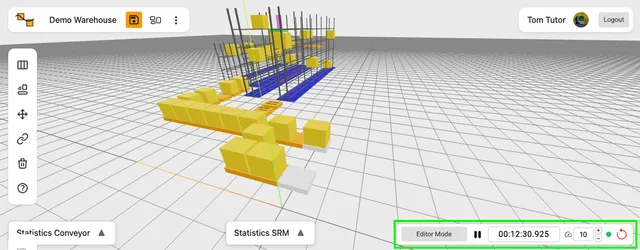
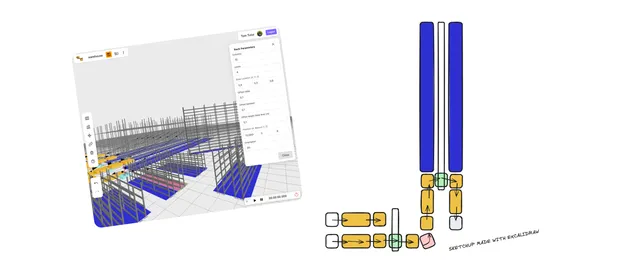
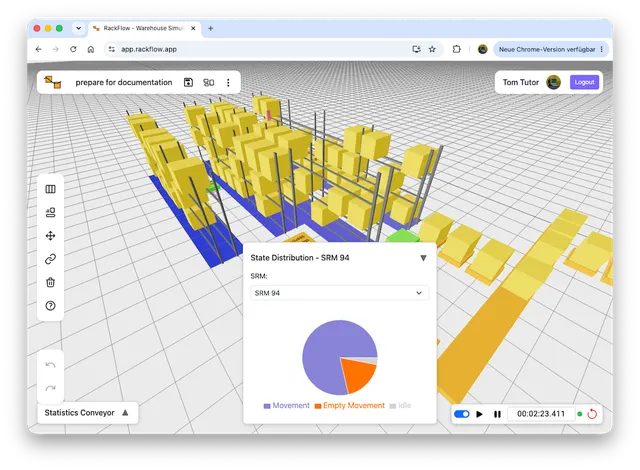
That is exactly where I am focused right now. I am working on a cloud-based warehouse simulation solution that helps create transparency before these issues show up in the real world. The goal is not just to visualize a warehouse, but to make bottlenecks, trade-offs, and hidden dependencies visible early enough to support better decisions.
Intralogistics projects are often judged by the performance of individual components. But real success depends on how well the whole system works together. That is why simulation is so valuable: it helps teams test ideas, challenge assumptions, and avoid expensive surprises before implementation begins.
I am curious how others see this. Have you experienced shuttle systems that looked great in theory but became difficult in practice once the real operation started? Respond via socials